


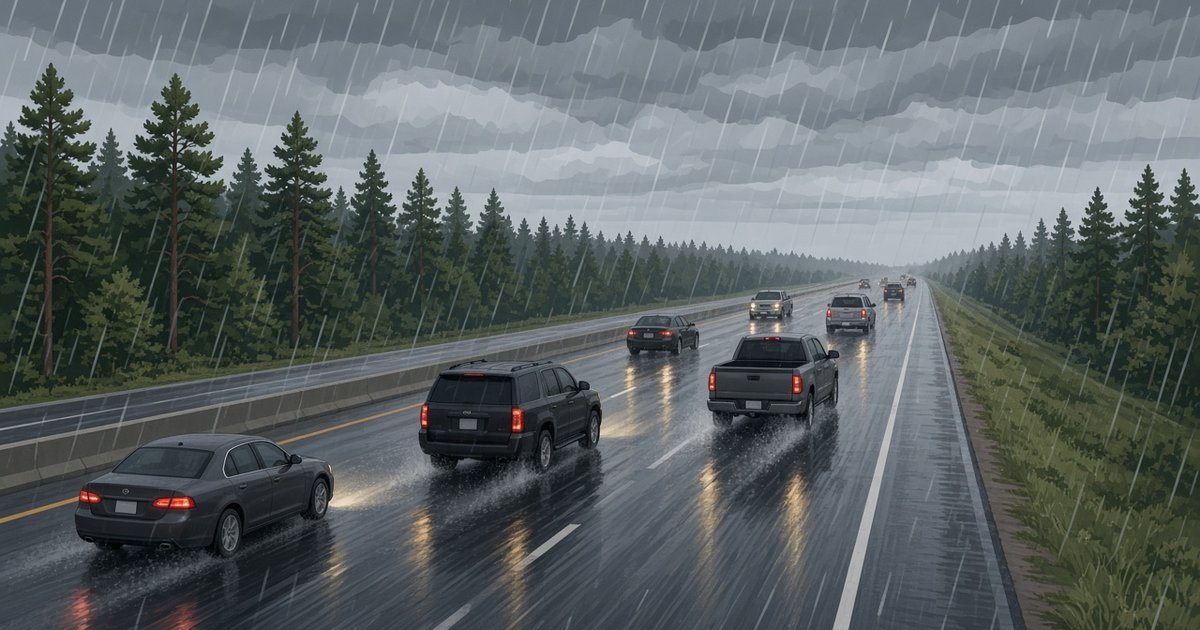
Texas rain can arrive fast and hard, and highway speeds leave little room for error when the pavement turns slick. On Saturday afternoon, one car losing traction on Interstate 10 near Vidor was enough to pull six more vehicles into a crash.
What Happened
KFDM reported that a crash involving a U-Haul and six other vehicles temporarily closed I-10 West in Orange County on Saturday, Oct. 31.
According to information from the Texas Department of Public Safety, the crash happened at about 12:55 p.m. near the 859 mile marker, past Vidor toward Rose City. The preliminary investigation indicates a Toyota Camry traveling west reportedly hydroplaned during a period of rainfall, causing a chain reaction with multiple other vehicles. Seven vehicles were involved, and non-life-threatening injuries were reported.
We’re glad no one was seriously hurt. The crash is a good reminder of how quickly wet roads can change a routine drive.
If You Got a Ticket in Texas
If you were cited for a traffic violation, a driving safety course may help. Defensive Drivers Institute’s Texas Defensive Driving Course is approved by the Texas Department of Licensing and Regulation (Provider CP1013). With the court’s permission, finishing it gets an eligible ticket dismissed, and you can also take it when a judge orders a driving safety course. Ask your court on or before the answer date on your ticket, because the court decides whether your ticket qualifies.
What Causes Hydroplaning
The Texas Department of Insurance’s bad weather driving fact sheet explains that hydroplaning happens when water in front of the tires builds up faster than the vehicle’s weight can push it out of the way. The car rises and slides on a thin layer of water, putting the driver in danger of skidding or drifting out of the lane.
The fact sheet points to three main causes:
- Speed. As speed increases, tire grip and your ability to control the vehicle decrease.
- Water depth. The deeper the water, the sooner tires lose traction, though even a thin layer at low speed can cause a loss of traction.
- Tire tread depth. Worn tires can’t clear water as well. The fact sheet notes that NHTSA recommends checking tread depth with a gauge at least once a month.
The same TDI fact sheet notes that rain accounts for more than 85% of weather-related roadway crashes in Texas.
How to Lower Your Risk in the Rain
The Texas Driver Handbook tells drivers to slow down and increase following distance when the road is wet, noting that many drivers find out too late what a small amount of rain can do. The TDI fact sheet adds several practical tips:
- Turn off cruise control so you stay in full control of your speed.
- Turn on your headlights, even in daylight, so others can see you.
- Drive in the middle lanes when you can, since rainwater tends to pool on the outer edges of the road.
- Avoid puddles and low spots, such as dips under bridges.
- Avoid hard braking and sharp turns, which can lead to skids.
- Don’t follow trucks or buses closely. Their spray can cut your visibility.
- Pull over somewhere safe if conditions get too bad. It’s often better to wait out a storm.
Space matters in a multi-vehicle crash, too. When one car loses control, the drivers behind it need room to stop or steer around it. Extra following distance in the rain gives you that room.
What to Do If Your Car Hydroplanes
According to the TDI fact sheet:
1. Ease off the gas. Let the vehicle slow until the tires grip the road again.
2. Steer gently in the direction of the skid. It may feel wrong, but avoid sudden moves.
3. Wait to feel the tires reconnect, then gently straighten the wheel as you regain control.
4. Brake gently if needed. Brake normally if your car has anti-lock brakes. Pump the brakes gently in an older car without them.
The Texas Driver Handbook gives similar advice for any skid: don’t hit the brakes suddenly and hard, take your foot off the gas, and turn the wheel in the direction of the skid. It also warns that old or worn tires with minimal or damaged tread are dangerous.
Check Your Tires Before the Next Storm
Tires are your only contact with the road. Check your tread depth and tire pressure regularly, and replace worn tires before the rainy season catches you. For more on Texas road safety, read our post on rising traffic deaths in the Brazos Valley.
The Bottom Line
Hydroplaning can happen to any driver, but speed, water, and worn tires make it far more likely. Slow down when it rains, leave extra room, and stay calm if your car starts to slide.
Got a ticket in Texas? Ask your court about a driving safety course, then start the Texas Defensive Driving Course.


