


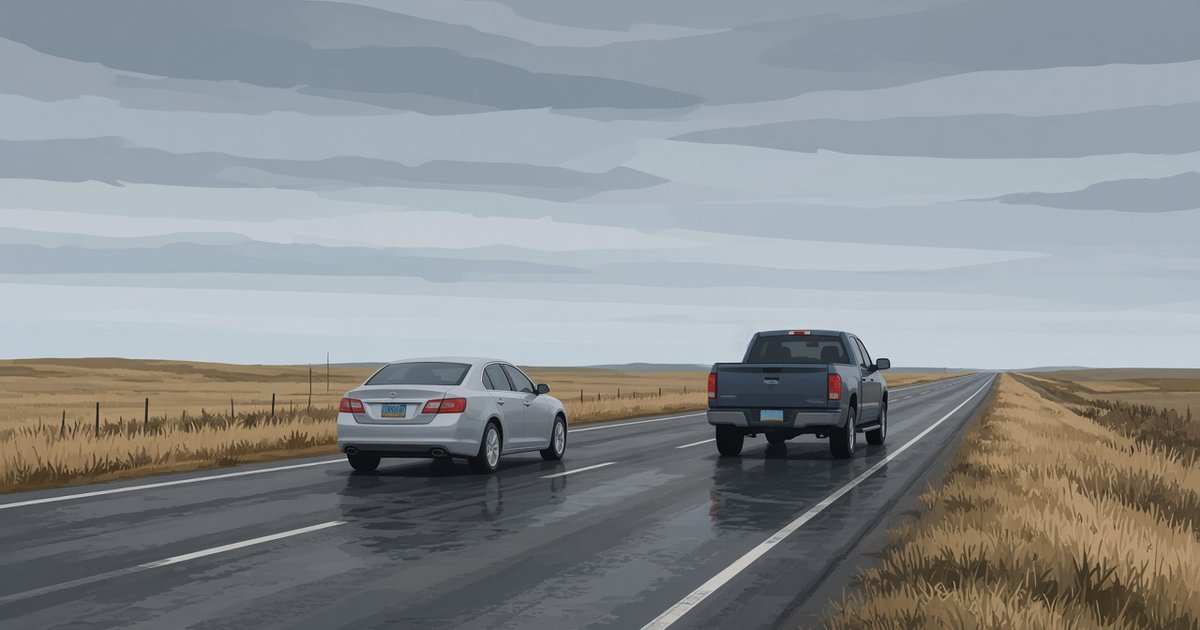
A few flurries do not have to look like a blizzard to change a North Dakota highway. On Sunday, the Highway Patrol reported slick spots, two crashes with minor injuries, and a short list of things it wants drivers to do: buckle up, slow down, leave more room, and stay off cruise control.
What Troopers Reported
Valley News Live, citing two North Dakota Highway Patrol Facebook posts, reported on Nov. 22 that slick road conditions were noted Sunday on Highway 23 and in parts of northeast North Dakota that received snow flurries.
The patrol said slick roads were reported on Highway 23, about one mile east of Highway 22, and that a crash there caused minor injuries. In a separate post, the patrol said areas of northeast North Dakota that had flurries were seeing slick spots, and that a crash on I-29 also resulted in minor injuries. Troopers asked drivers to buckle up, slow down for conditions, increase following distance, and avoid using cruise control on slick roads.
We are hoping the people who were hurt recover. These were not headline-level storms. That is part of the point: a damp, just-slick stretch can still put a vehicle off its line, especially if the car is holding a set speed for you.
This is a different lesson from our earlier first-snow driving guidance. The focus here is why cruise control belongs off when the pavement is questionable, and how to handle a holiday weekend that may mix clear miles with sudden slick spots.
Why Cruise Control Is a Poor Fit for Ice
Cruise control is built to hold a speed. On a dry, empty highway that can be restful. On a slick or patchy road, the system can keep feeding power when your tires have already started to lose grip, or it can be slow to shed speed when the surface changes under you. A light patch of ice, a bridge deck, or a shaded cut can appear in a few seconds. You want to be the one deciding when to ease off, not a setting that is trying to maintain 65.
Turn cruise control off when:
- Snow, slush, or ice is on the pavement, even in spots
- The road looks wet and the temperature is near freezing
- You are on a bridge, overpass, or rutted stretch
- Visibility drops, or the car ahead starts kicking up spray or slush
Use a light foot, look farther ahead, and leave more following distance than you would on dry pavement. If the car starts to feel light or wander, ease off the gas and steer smoothly. Sudden braking or a sharp turn can make a slick spot worse.
A Holiday-Weekend Checklist
Thanksgiving travel in North Dakota often means long miles and changing weather from one county to the next.
- Check 511 or ND Roads before you go, and again if the sky changes.
- Slow down even if the road looked fine 10 miles back.
- Buckle every passenger.
- Keep a kit, a charger, and a tank that is not on empty, in case a slick stretch or a crash delays you.
North Dakota Point Reduction
If a slick-road ticket or points already on your record have you looking at an approved course, Defensive Drivers Institute’s North Dakota Point Reduction Course is 100% online. Finish the course and email your certificate to NDDOT at DRS@ND.GOV. NDDOT takes 3 points off your existing record once it receives the certificate. You can use that option once in any 12-month period, and it comes off points already on your record, not future ones. For some tickets of 5 points or fewer, you may be able to keep the new ticket’s points off your record if you tell the court when you post bond and NDDOT gets proof within 30 days. That option is not available for DUI, reckless driving, or tickets of 6 or more points. Check with your court.
The Bottom Line
Sunday’s crashes happened on flurries and slick spots, not a historic storm. Turn off cruise control when the road might be icy, leave more room, and slow down for the stretch you are actually on — not the one you drove an hour ago.
Have points on your North Dakota record, or a ticket that qualifies? Confirm the rules, then start the Point Reduction Course.


